Carbon credit offsetting with blockchain: traceable, verifiable, trusted
The trust gap in carbon markets
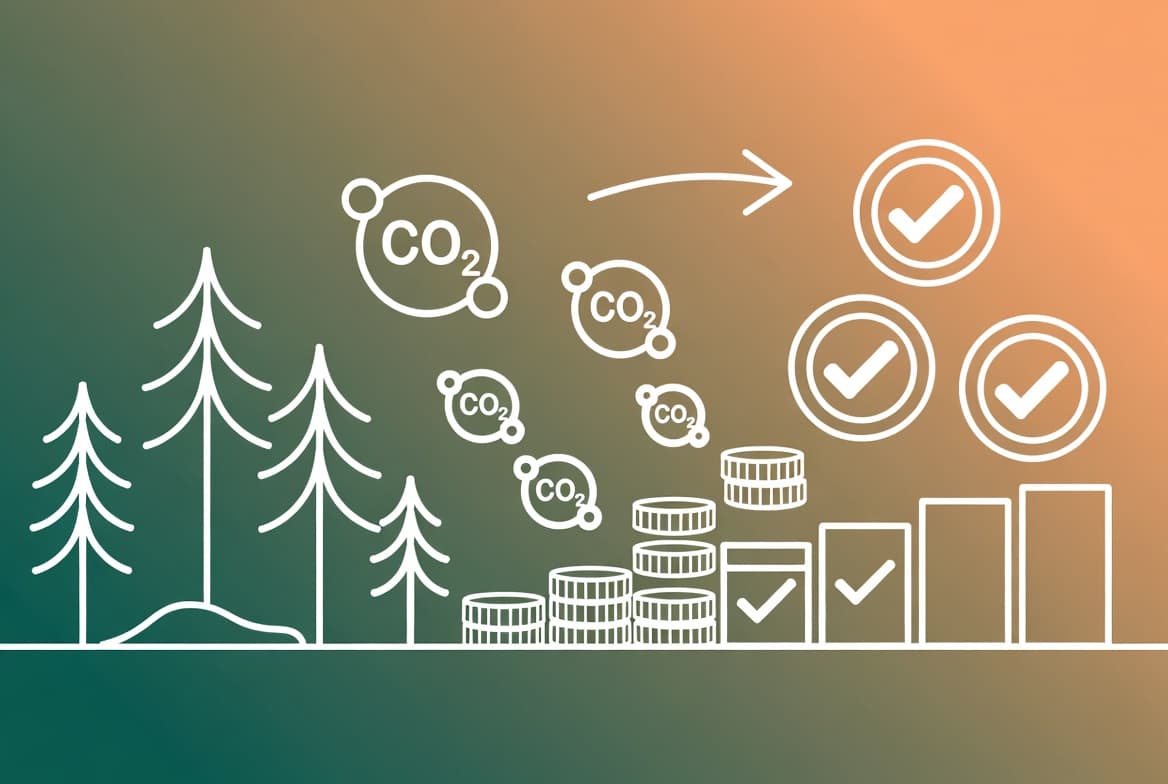
A carbon credit represents one tonne of CO₂ avoided or removed. The problem is rarely the climate science — it is the bookkeeping. The same credit can be sold twice, registries are siloed, and buyers cannot easily prove a credit was genuinely retired on their behalf.
What blockchain actually fixes
Putting credits on a shared ledger does not magically plant trees — but it does solve the accounting:
- Unique, non-duplicable tokens — each credit exists once and cannot be double-spent.
- End-to-end traceability — from issuance, through transfers, to final retirement.
- Public, auditable proof — a company can show, on-chain, exactly which credits offset its footprint.
Built for companies and institutions
In a system we developed for a Swiss carbon-credit bank, organizations can offset their footprint and walk away with a verifiable record — not a PDF certificate that nobody can check.
Why it matters now
Regulators and customers are done with vague "net-zero" claims. Traceable, verifiable offsetting is becoming the baseline. If your business compensates emissions, the ability to prove it is fast becoming as important as the offset itself.